i.
Line
A straight edge at any angle. The basis of every measurement: proportion, alignment, and the run of a contour.
The classical methods of measurement, value, and proportion, taught in ateliers from Florence to Pasadena, laid quietly over any reference photo on your phone. Open. Observe. Draw.
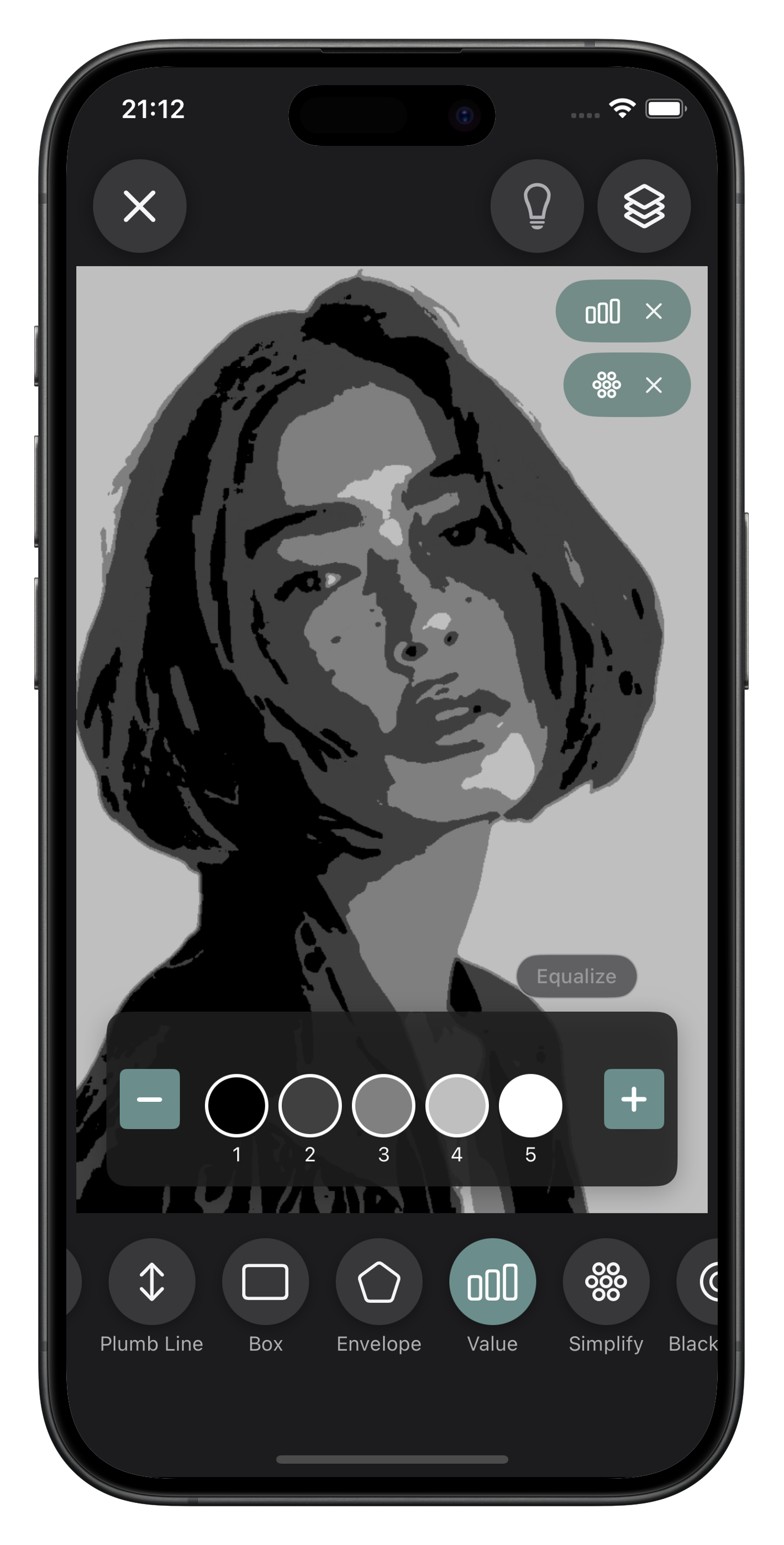
A great drawing is built on values, not lines. Squinting reduces the world to its essential tones: light, mid, shadow. Artist Tools does it instantly. Choose your value count. Reveal the structure underneath. Draw the shapes that make form sing.
The same range you'd block in for a value study, but live. Adjust on the fly to see what holds and what dissolves.
Detail disappears. Massing emerges. You see the read of the picture before you commit a single line to paper.
Your own photos, atelier casts, master paintings, the tomato on your kitchen counter. Import once, study forever.
Eight measuring and observation instruments, the same ones you'd find on a drawing board in any classical atelier, translated faithfully to your screen.
A straight edge at any angle. The basis of every measurement: proportion, alignment, and the run of a contour.
The vertical that doesn't lie. Hang it through any landmark and check the alignment of every form below.
Frame the subject. Test the proportional rectangle the figure inhabits before any line is committed.
The straight-edged silhouette. Block the outer shape with angles before turning it into curves.
Posterize the reference into its essential tones. Read the picture before you draw it.
Reduce the reference to fewer colors. Strip detail and see the underlying massing with a digital squint.
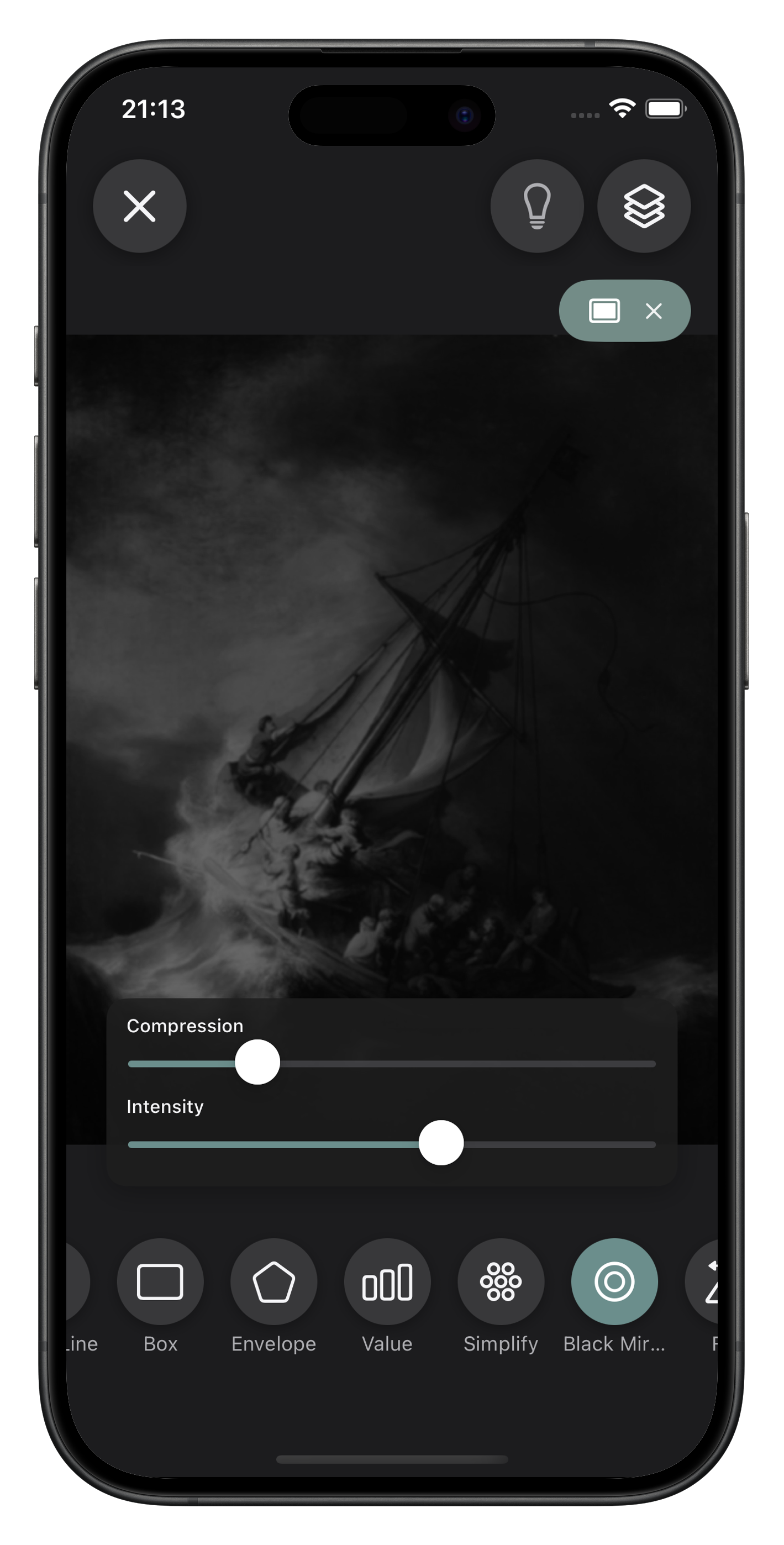
The traditional Claude glass, digital. Compress the value range to study subtle relationships.
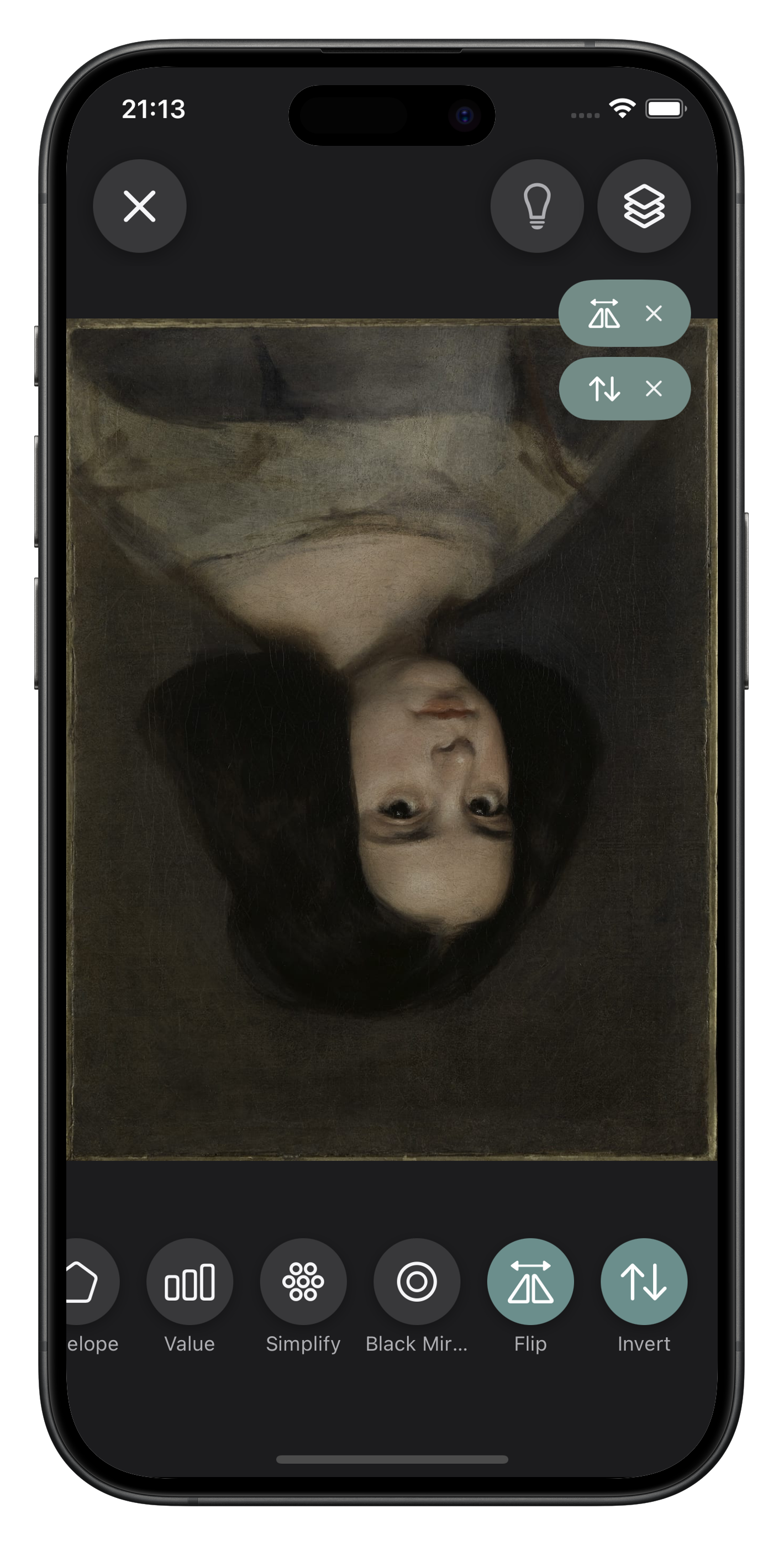
Mirror or invert your reference to reveal mistakes the eye no longer notices. The oldest trick in the studio.
Designed to disappear. Dark by default, light when needed, no chrome that competes with the reference. Your eye stays on the work.
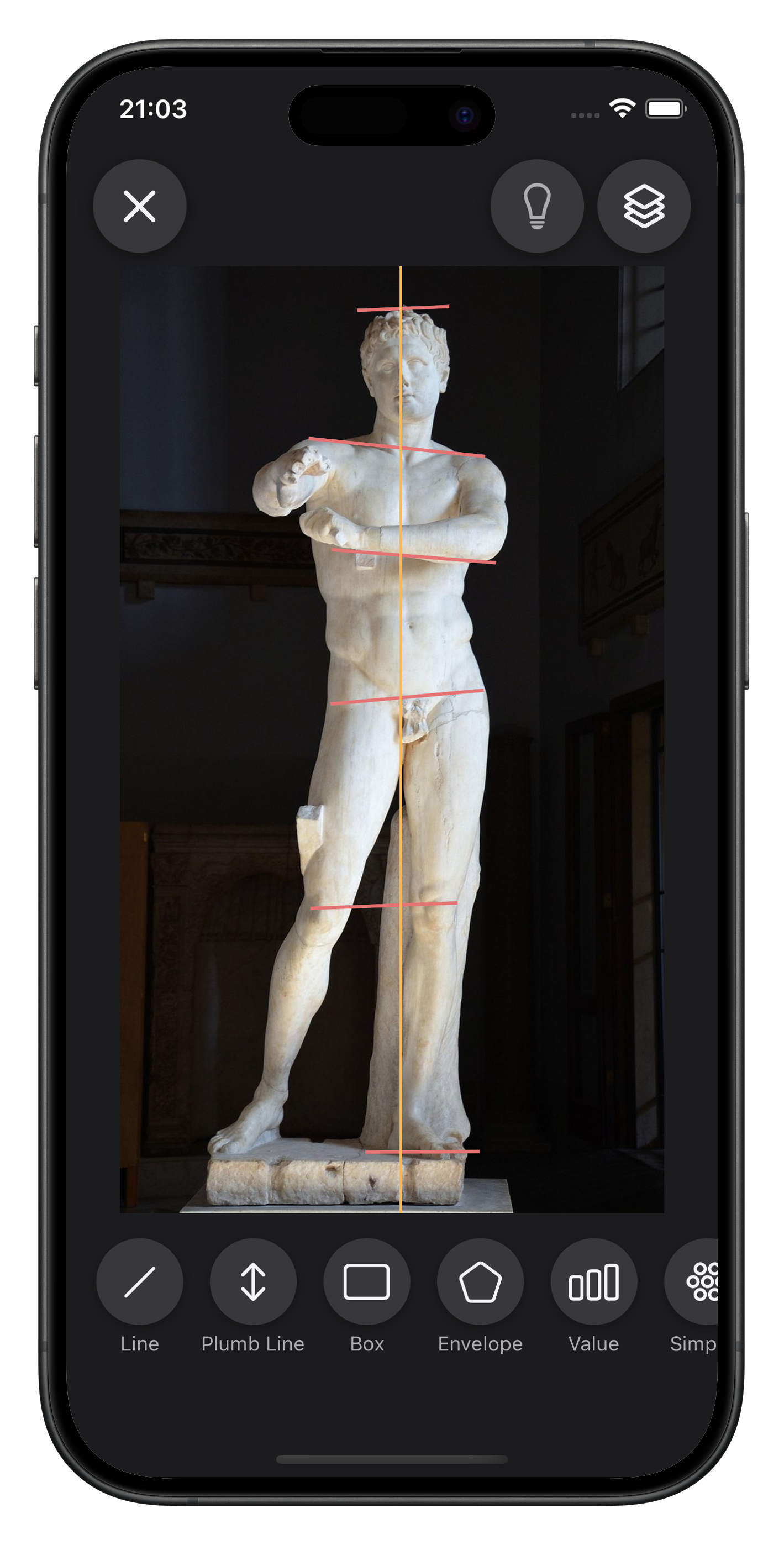
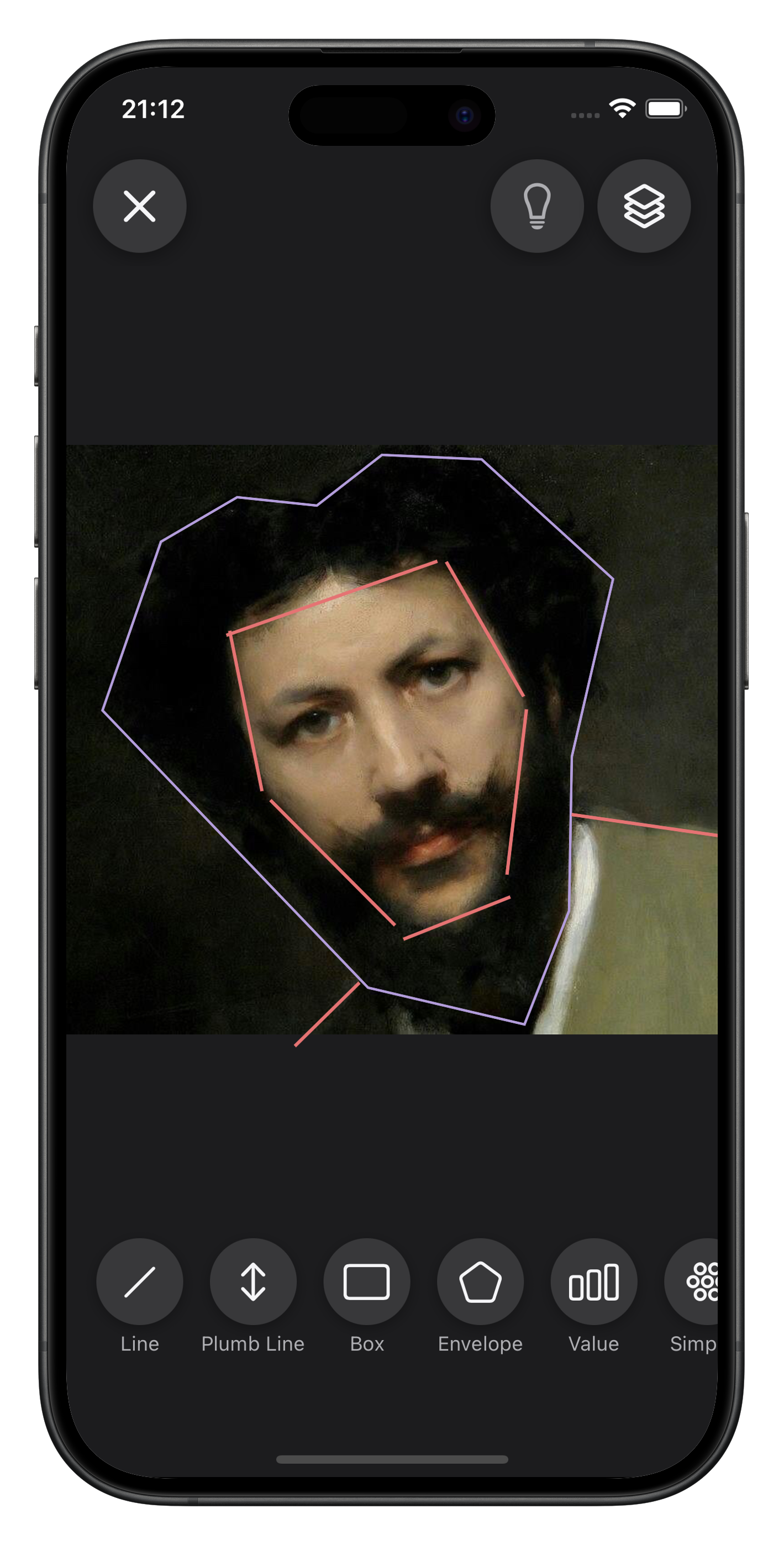
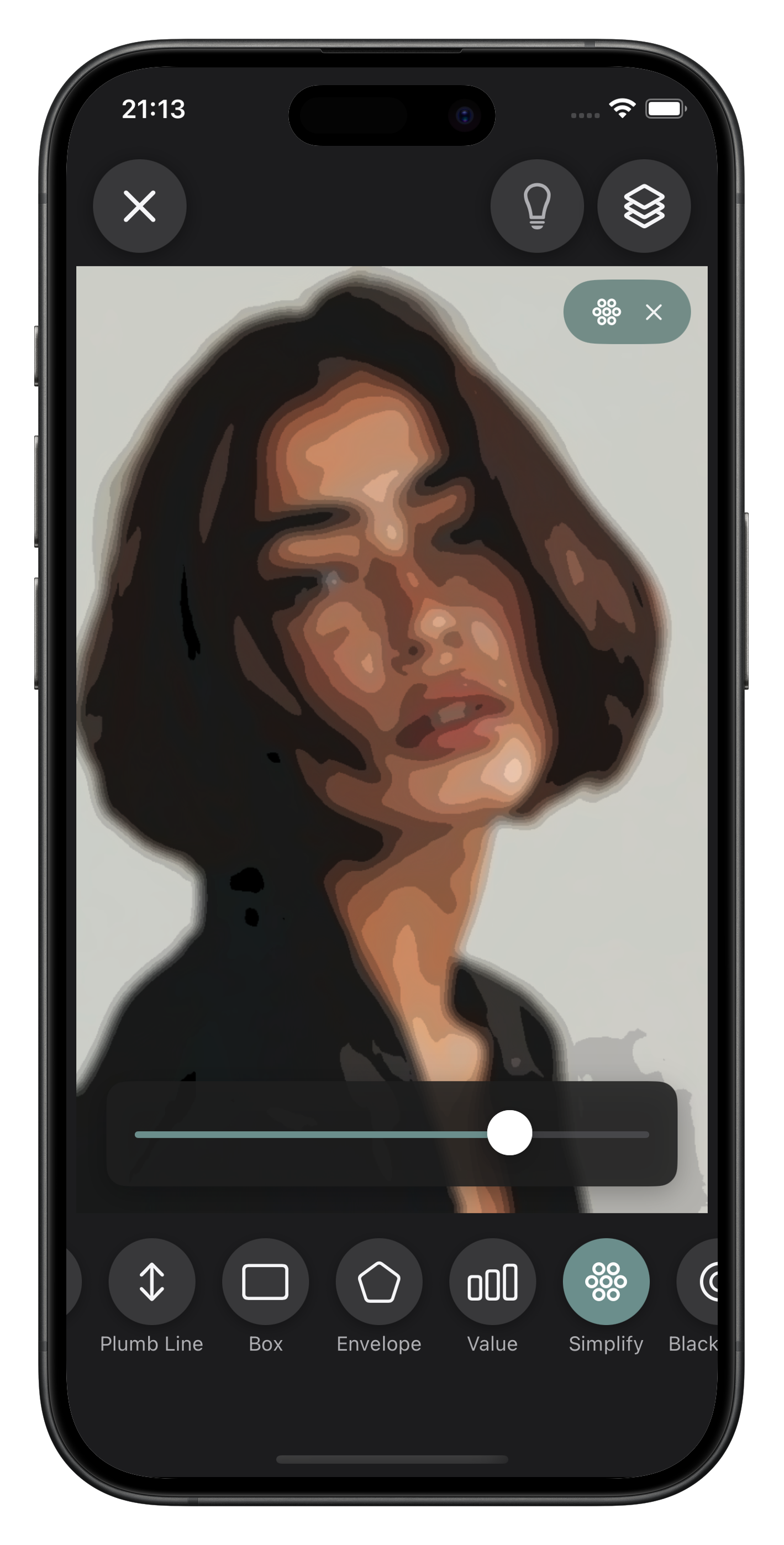
Whether you draw three hours a day or three hours a week, the same tools the masters used will strengthen the way you see.
Free to download. No account. Works offline. The first project is on us. See what your reference has been hiding.
On a computer? Scan to download.
Use your phone's camera to open the App Store or Google Play directly.